
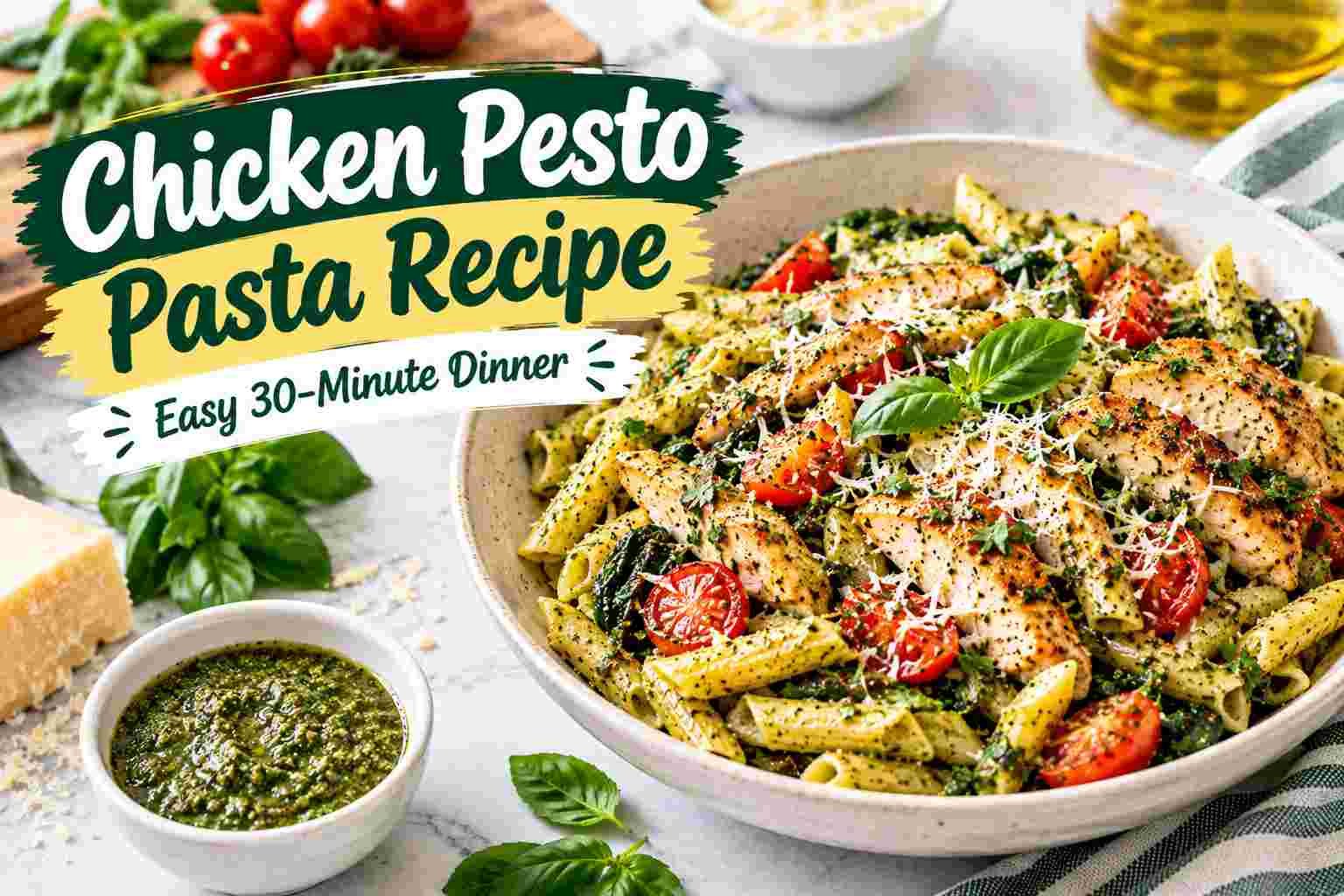
Chicken Pesto Pasta
Chicken Pesto Pasta
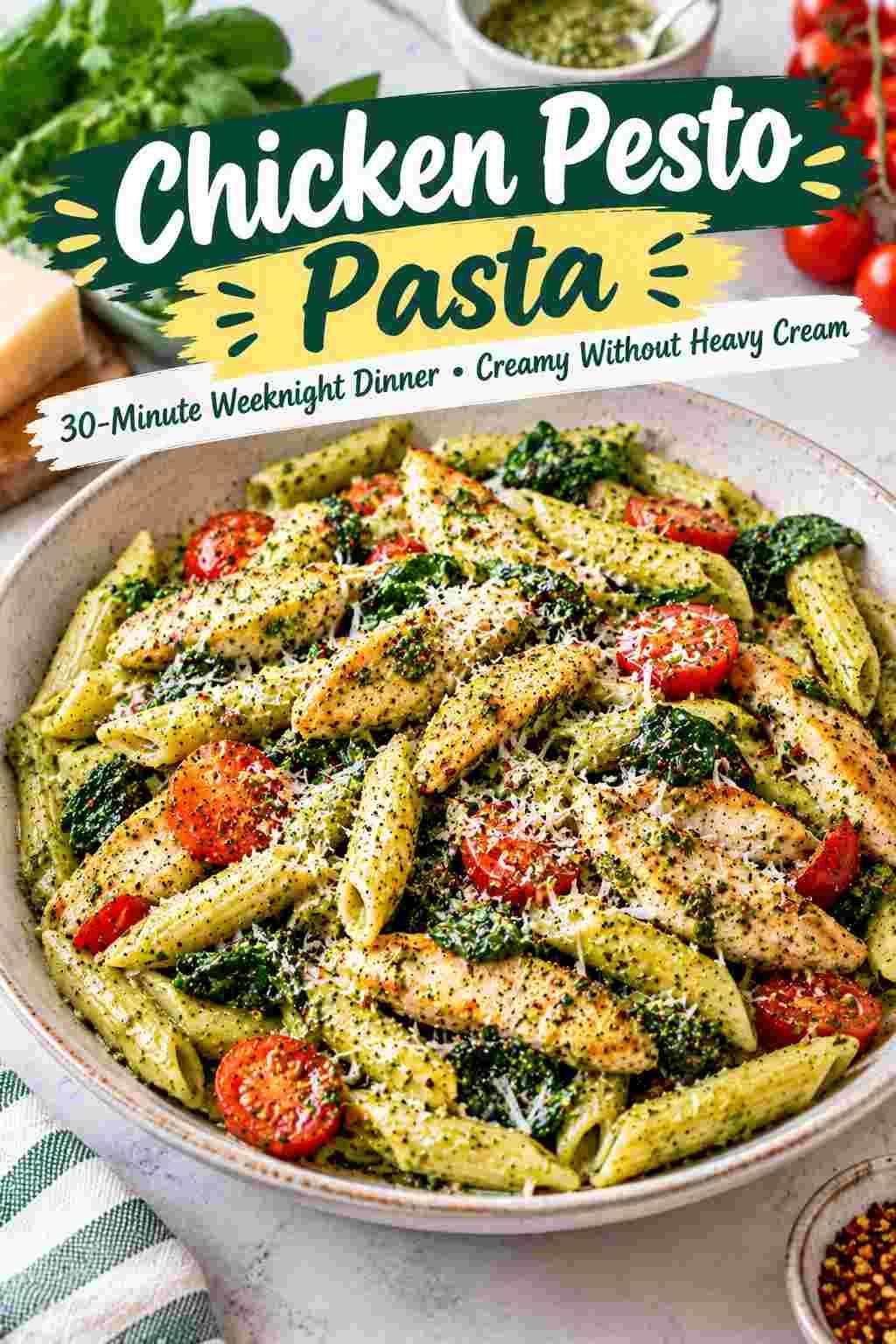
This chicken pesto pasta is an effortless 30-minute dinner made with tender golden chicken breast, al dente penne pasta, vibrant basil pesto, sweet cherry tomatoes, fresh baby spinach, and aged Parmesan [1].
The sauce is luscious and creamy without requiring a heavy cream base [1]. The secret is capturing a little starchy cooking water to loosen the pesto, emulsifying it into a glossy sauce that coats every ridge of the pasta [1].
Quick Answer: How Do You Make Chicken Pesto Pasta?
To make chicken pesto pasta, boil 10 oz of short pasta (such as penne or fusilli) until al dente, reserving ¾ cup of starchy pasta water before draining [1]. Sauté 1 lb of seasoned 1-inch chicken breast pieces in olive oil until golden and the thickest piece registers 165°F (73.9°C), then transfer to a plate [1]. Cook minced garlic for 30 seconds, add the pasta and ½ cup pasta water, turn off the heat, and fold in ½ cup of basil pesto and ¼ cup Parmesan until glossy [1]. Gently toss with cherry tomatoes, baby spinach, and the cooked chicken until wilted, and serve immediately [1].
FreshFitChef Creator Note
I’m not a professional chef. I’m a home cook and the founder of FreshFitChef. Traditional Italian Pesto Genovese is a raw emulsion of fresh basil, garlic, pine nuts, olive oil, and cheese [1]. Boiling pesto ruins its bright green color and dulls its delicate aroma [1]. In this recipe, we toss the pesto off the direct high heat with hot pasta water, preserving that vibrant, peppery basil freshness while coating every single noodle [1]!
Why You’ll Love This Chicken Pesto Pasta
- Ready in 30 Minutes: Perfect for hectic weeknights without long prep lists [1].
- Creamy Without Heavy Cream: Starchy pasta water and Parmesan create a silky emulsion that lets basil remain the star [1].
- High-Protein Complete Meal: Delivers approximately 47 g of protein per serving [1].
- Fresh & Vibrant: Juicy cherry tomatoes and tender baby spinach cut through the richness of the pesto [1].
USDA Poultry Cooking & Food Safety Standards
According to the USDA Food Safety and Inspection Service, all poultry must reach a safe minimum internal temperature of 165°F (73.9°C) measured with an instant-read meat thermometer in the thickest part [1]. Refrigerate cooked chicken pasta leftovers within 2 hours and consume within 3 to 4 days [1].
Chicken Pesto Pasta Ingredients
| Ingredient | Amount | Purpose in the Dish |
|---|---|---|
| Boneless, Skinless Chicken Breast | 1 lb (454 g) | Lean, high-protein main (cut into 1-inch pieces) [1] |
| Dried Short Pasta (Penne, Fusilli, Rotini) | 10 oz (283 g) | Main carb; tubes and spirals trap pesto sauce cleanly [1] |
| Basil Pesto (Jarred or Fresh) | ½ cup (~120 g) | Aromatic core sauce (basil, garlic, pine nuts, EVOO) [1] |
| Extra-Virgin Olive Oil | 1 tbsp | Searing chicken and carrying aromatics [1] |
| Fresh Garlic | 2 cloves (minced) | Savory aromatic depth [1] |
| Cherry Tomatoes | 1 cup (150 g) | Sweetness and refreshing acidity (halved) [1] |
| Fresh Baby Spinach | 2 cups (60 g) | Wilts instantly for color, nutrients, and texture [1] |
| Parmesan Cheese | ¼ cup (25 g) | Finely grated to bind and enrich the emulsion [1] |
| Reserved Pasta Water | ½ to ¾ cup | Liquid gold: starch emulsifies the pesto into silk [1] |
| Salt & Black Pepper | To taste & ½ tsp | Seasons chicken and pasta cooking water [1] |
| Fresh Basil & Red Pepper Flakes | Optional | Finishing herbal aroma and gentle heat [1] |
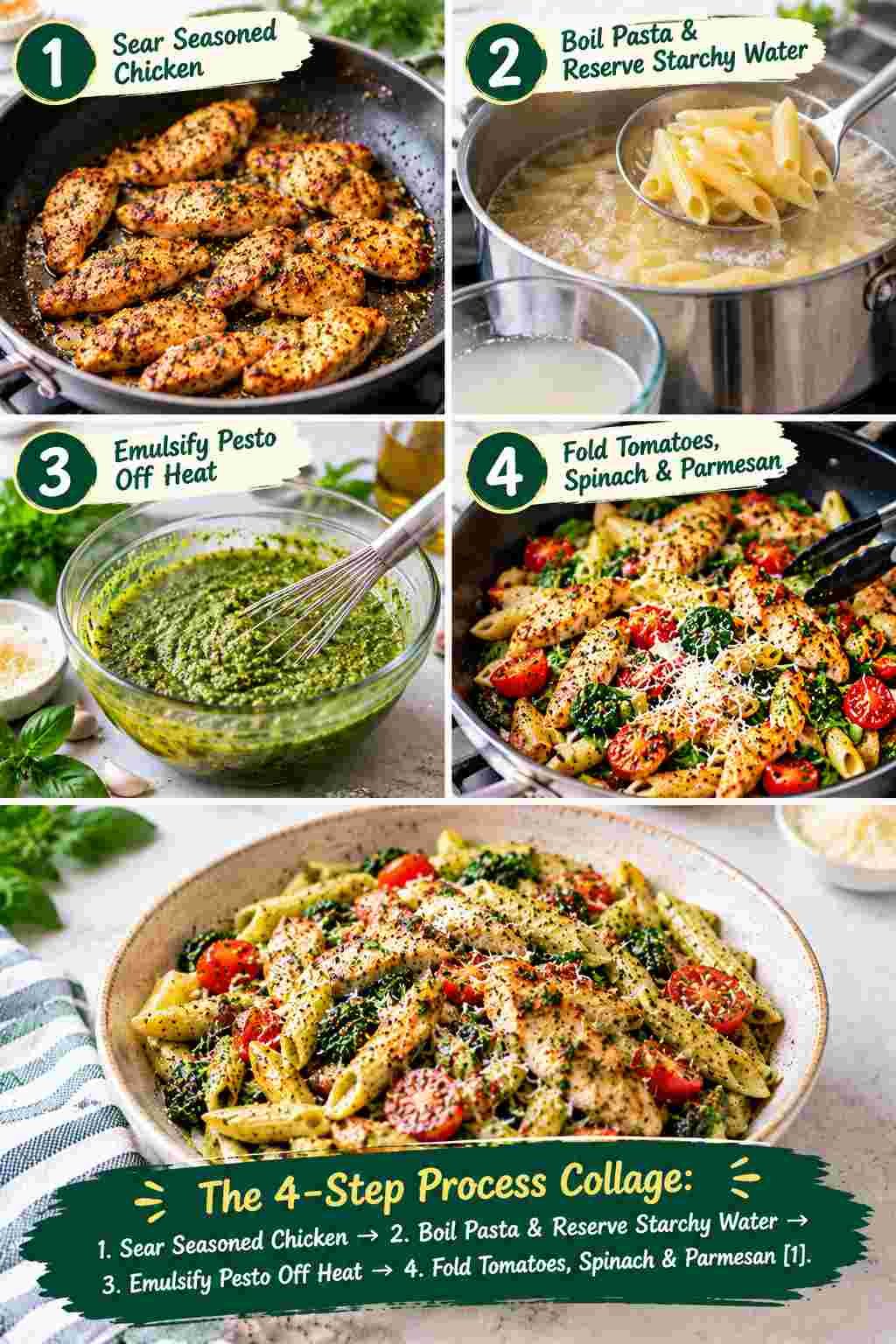
How to Make Chicken Pesto Pasta (Step-by-Step)
1. Boil the Pasta & Save the Water
Bring a large pot of salted water to a rolling boil [1]. Add the pasta and cook according to package directions until al dente [1]. Crucial step: Scoop out at least ¾ cup of starchy pasta water before draining! Drain pasta and set aside [1].
2. Brown the Chicken
While the pasta cooks, cut chicken breasts into uniform 1-inch pieces; pat dry with paper towels and season with salt and black pepper [1]. Heat 1 tablespoon olive oil in a large skillet over medium-high heat [1]. Cook chicken in a single layer for 5–7 minutes, turning occasionally, until golden and the thickest piece registers 165°F (73.9°C) [1]. Transfer to a clean plate [1].
3. Sauté Aromatics & Add Pasta Water
Reduce heat to medium. Add minced garlic to the skillet drippings and cook for 30 seconds until fragrant (do not let it brown) [1]. Add the drained pasta and ½ cup of reserved pasta water to the skillet [1].
4. Emulsify Pesto Off Direct Heat
Turn the heat to low or off completely [1]. Stir in the ½ cup of basil pesto and ¼ cup grated Parmesan [1]. Toss vigorously; the starch in the water and the cheese will bind with the pesto oil into a glossy, creamy coating [1]. Add another splash of pasta water if the sauce appears tight [1].
5. Fold Vegetables & Serve
Add the halved cherry tomatoes and baby spinach [1]. Toss gently for 1 minute until the spinach leaves wilt into the warm pasta [1]. Return the cooked chicken and any resting juices back to the skillet [1]. Taste and finish with cracked black pepper, fresh basil leaves, and a squeeze of fresh lemon juice if desired [1]. Serve warm!
Chef’s Secret: Why We Never Boil Pesto
Unlike tomato sauce, basil pesto is a finished, uncooked emulsion [1]. Prolonged boiling scorches the basil leaves, turns the sauce an unappealing olive-drab color, and causes the olive oil to separate into an oily pool [1]. Always remove the pan from direct high heat before tossing with hot pasta and reserved cooking water [1]!
Creamy vs. No-Cream Variations
| Version | Sauce Emulsion Base | Flavor Profile | Best For |
|---|---|---|---|
| FreshFitChef Base | Starchy pasta water + Parmesan [1] | Bright, peppery basil forward [1] | Clean weeknight dinner [1] |
| Rich Creamy | ½ cup heavy cream + pasta water [1] | Indulgent, velvety, mellow garlic [1] | Cozy comfort food [1] |
| Greek Yogurt | ⅓ cup plain Greek yogurt + water [1] | Tangy, rich, high-protein [1] | Light creamy balance [1] |
| Whipped Ricotta | ½ cup whole-milk ricotta [1] | Soft, pillowy, delicate [1] | Decadent Italian style [1] |
Flavor Adaptations & Shortcuts
- Sun-Dried Tomatoes: Swap half of the cherry tomatoes for ⅓ cup of thinly sliced oil-packed sun-dried tomatoes for an intensely sweet, chewy umami bite [1].
- Rotisserie Chicken Shortcut: Skip cooking raw meat! Shred 2 to 3 cups of pre-cooked rotisserie chicken and fold in at the very end just to warm through [1].
- Broccoli Florets: Drop 2 cups of small broccoli florets into the boiling pasta pot during the final 3 minutes of cooking, drain together, and toss with pesto [1].
Meal Prep, Storage & Reheating
Because pasta continues absorbing sauce as it sits, chicken pesto pasta naturally thickens in the refrigerator [1]. Divide into glass meal prep containers and refrigerate for up to 3 to 4 days [1].
To Reheat Without Drying Out: Never microwave dry! Add 1 to 2 tablespoons of water or chicken broth to the bowl before reheating [1]. Microwave loosely covered in 45-second intervals, stirring between, until heated through to 165°F [1]. The added liquid reactivates the glossy pesto emulsion instantly [1]!
Explore More FreshFitChef Weeknight Favorites:
Looking for more fast, protein-packed dinners and fresh sides? Check out these reader favorites:
Frequently Asked Questions
Can I use store-bought jarred pesto?
Yes, absolutely [1]! A quality refrigerated or jarred basil pesto is a fantastic weeknight time-saver [1]. Just remember to loosen it with hot starchy pasta water so it distributes smoothly across the noodles [1].
Why did my pesto pasta turn out oily or dry?
If it is dry, the noodles absorbed all moisture; stir in 2–3 tablespoons of hot pasta water [1]. If it is oily, the pesto was heated too aggressively, causing the oil to break from the basil [1]. Tossing off the heat with starchy water prevents both issues [1].
Can I freeze chicken pesto pasta?
You can freeze leftovers in an airtight container for up to 3 months, though the pasta may soften slightly upon thawing [1]. Thaw overnight in the fridge and reheat gently on the stovetop with a splash of broth [1].
Chicken Pesto Pasta
Recipe by M. Inzamam Abbasi — Founder of FreshFitChef
An easy 30-minute chicken pesto pasta made with tender chicken, basil pesto, penne, cherry tomatoes, spinach, and Parmesan. Creamy without heavy cream!
Ingredients
- 1 lb (454 g) boneless, skinless chicken breast (1-inch cubes)
- 10 oz (283 g) dried penne, fusilli, or rotini pasta
- ½ cup basil pesto (store-bought or homemade)
- 1 tablespoon extra-virgin olive oil
- 2 garlic cloves, finely minced
- 1 cup (150 g) cherry tomatoes, halved
- 2 cups (60 g) fresh baby spinach
- ¼ cup (25 g) finely grated Parmesan cheese
- ½ to ¾ cup reserved starchy pasta cooking water
- ½ teaspoon freshly ground black pepper
- Fine salt (to taste for seasoning)
- Optional: Fresh basil leaves & red pepper flakes
Instructions
- Boil Pasta: Cook pasta in salted boiling water until al dente [1]. Scoop out at least ¾ cup starchy pasta water, then drain noodles [1].
- Sear Chicken: Season cubed chicken with black pepper and salt [1]. Heat olive oil in a skillet over medium-high heat [1]. Cook chicken for 5–7 minutes until golden and internal temperature reaches 165°F (73.9°C) [1]. Transfer to a plate [1].
- Aromatics: Reduce skillet heat to medium; cook minced garlic for 30 seconds until fragrant [1].
- Emulsify: Add cooked pasta and ½ cup pasta water to the pan [1]. Turn heat to low or off [1]. Add pesto and Parmesan, tossing vigorously until a glossy, creamy sauce coats the noodles [1].
- Finish Sauce: Add Parmesan and additional pasta water as needed until the pasta is evenly coated and glossy [1].
- Add Vegetables & Chicken: Fold in cherry tomatoes, baby spinach, and cooked chicken until spinach wilts [1].
- Serve: Adjust salt, pepper, or lemon juice, and serve immediately topped with fresh basil [1]!
Nutrition Information (Estimated Per Serving)
600 kcal | 47g Protein | 63g Carbohydrates | 20g Total Fat | 4g Dietary Fiber. (Nutritional values are calculated based on listed ingredients without extra bread sides; values vary by pesto brand) [1].
Food Safety: Poultry must reach 165°F internally verified with a food thermometer [1, 2]. Store leftovers in an airtight container in the refrigerator for up to 3–4 days [1].


One Comment